Shopping for dining room furniture means investing in a space where your family will gather for years to come. Haverty’s has built a reputation over more than a century for delivering solid construction, classic design, and furniture that holds up to daily use. Whether you’re furnishing a formal dining room or a casual eat-in kitchen, understanding what Haverty offers, and how to choose pieces that fit your home, makes the difference between a purchase you’ll love and one that feels like a compromise.
Table of Contents
ToggleKey Takeaways
- Haverty dining room furniture uses solid hardwood construction with mortise-and-tenon joinery and corner blocks, making it more durable for daily use compared to particle board alternatives.
- Measure your dining room to ensure at least 36 inches of clearance around the table, and allow 24 to 30 inches of width per person when selecting seating capacity.
- Haverty offers customization options on tables, chairs, and finishes, giving you flexibility to match traditional, contemporary, or transitional home styles without custom pricing.
- Maintain humidity levels between 35% and 55% in your dining room, and use only water and a microfiber cloth for daily cleaning to preserve the finish and prevent damage.
- Choose between traditional pedestal tables for legroom or four-leg designs for stability, and consider extension tables with butterfly or removable leaves if you host occasionally but want flexibility.
What Makes Haverty Dining Room Furniture Stand Out
Haverty’s has been in business since 1885, which means they’ve had plenty of time to figure out what works. Their dining furniture emphasizes hardwood construction, you’ll find solid oak, maple, cherry, and rubberwood in most of their tables and chairs, not particle board wrapped in veneer. That matters when you’re dealing with the wear and tear of daily meals, assignments sessions, and holiday dinners.
Their tables typically feature mortise-and-tenon joinery on legs and aprons, a traditional woodworking method that’s far more durable than screws or dowels alone. Chairs often include corner blocks and double-dowel construction at stress points. These aren’t details you see in photos, but they’re what keep furniture tight and wobble-free after years of use.
Haverty’s also offers customization options on many collections. You can often select your wood finish, table size, and upholstery fabric for chairs. For design enthusiasts keeping tabs on industry trends, this flexibility aligns with what contemporary furniture lines emphasize: personalization without custom-shop pricing.
Another practical advantage: their in-home delivery and setup service. Dining tables, especially extension tables with leaves, are heavy and awkward to maneuver. Haverty’s delivery teams will uncrate, assemble, and position your furniture, and they’ll haul away the packaging. It’s worth factoring that into your budget versus flat-pack furniture you’ll wrestle up the stairs yourself.
Popular Haverty Dining Room Collection Styles
Haverty’s organizes their inventory into distinct collections, each with coordinating tables, chairs, buffets, and hutches. Understanding the style categories helps narrow your search.
Traditional and Classic Collections
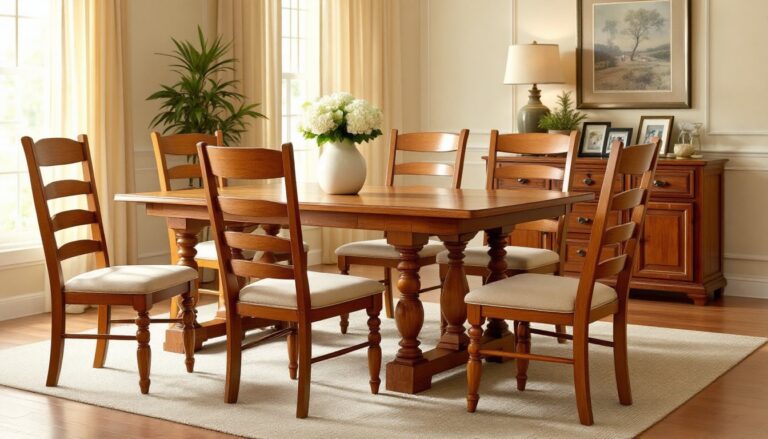
Traditional Haverty collections feature turned legs, decorative aprons, and rich wood tones. The Riverside collection, for example, includes pedestal tables with carved center posts and claw feet, the kind of detailing you’d see in American Colonial or Victorian revival styles. Chairs often have upholstered seats and ladder-back or shield-back designs.
These pieces work well in homes with architectural details like crown molding, wainscoting, or coffered ceilings. If your dining room has a chair rail or built-in china cabinet, a traditional Haverty set will feel cohesive rather than out of place. Finishes tend toward cherry, espresso, and medium oak stains that develop a patina over time.
One trade-off: traditional tables with pedestal bases limit seating flexibility. A double-pedestal table offers more legroom than four corner legs, but the base footprint can interfere with chair placement at the ends. Measure carefully if you’re planning to seat more than six regularly.
Modern and Contemporary Options
Haverty’s contemporary collections strip away ornamentation in favor of clean lines, geometric shapes, and mixed materials. You’ll see tables with metal bases, glass or stone tops, and chairs with molded plywood or metal frames. The Midtown collection, for instance, pairs a walnut veneer top with a brushed steel trestle base.
These designs suit open-concept homes where the dining area flows into the kitchen or living room. The simpler silhouettes don’t compete visually with stainless appliances, minimalist cabinetry, or industrial lighting fixtures. Finishes lean toward gray wash, natural oak, and matte black.
Contemporary dining chairs from Haverty often feature low-profile backs and slim profiles. That’s great for sight lines in an open floor plan, but consider comfort if you’re the type to linger over coffee after meals. Some modern chairs prioritize aesthetics over ergonomics, sit in them before you buy. If you’re comparing retailers, Ashley Furniture offers similar contemporary lines with slightly different price points.
A note on mixed-material tables: glass tops show every fingerprint and watermark. Stone or quartz composite tops are more forgiving but add significant weight. Make sure your floor can handle it, especially in second-floor dining rooms or older homes with dimensional lumber joists rather than engineered trusses.
How to Choose the Right Haverty Dining Set for Your Space
Before you fall in love with a specific table, measure your dining room and map out the space. You need 36 inches of clearance on all sides of the table for chairs to pull out and people to walk behind seated diners. That’s the minimum, 42 inches is more comfortable if traffic flows through the room.
A standard dining table is 30 inches tall. Chairs should allow 10 to 12 inches between the seat and the table apron (the horizontal frame under the tabletop). If the apron is particularly deep or if you’re tall, sit at the table with your knees under it. Some tables have insufficient clearance, especially those with decorative aprons or stretchers.
For seating capacity, allow 24 inches of table width per person as a minimum, 30 inches for elbow room. A 72-inch rectangular table seats six comfortably, eight if you squeeze. Round tables maximize space efficiency, a 60-inch round seats six to eight, but you sacrifice surface area for serving dishes.
Consider extension tables if you host occasionally but don’t want a large table dominating the room year-round. Haverty offers tables with self-storing butterfly leaves (the leaf folds and tucks under the tabletop) and removable leaves that you store elsewhere. Butterfly leaves are more convenient but add a visible seam down the table’s center. Removable leaves disappear when not in use but require closet space.
Pay attention to the table’s base style relative to your seating plan. A pedestal base offers maximum leg room, a four-leg table is the most stable, and a trestle base splits the difference. If you’re planning bench seating on one side, a popular choice in farmhouse and transitional styles, make sure the base doesn’t interfere with sliding the bench in and out.
Finally, think about the finish’s durability. Haverty’s offers both catalyzed lacquer finishes (more resistant to water rings and scratches) and hand-rubbed oil finishes (warmer appearance but require more maintenance). If you have young kids, prioritize durability. You can always refinish a solid wood table later when life calms down.
Caring for and Maintaining Your Haverty Dining Furniture
Solid wood furniture reacts to changes in humidity, expanding in summer and contracting in winter. Keep your dining room’s relative humidity between 35% and 55%, a simple hygrometer from the hardware store will tell you where you stand. If you’re in a dry climate or heat with forced air, run a humidifier during winter to prevent joints from loosening and veneer from cracking.
For daily cleaning, use a microfiber cloth dampened with water only. Haverty’s finishes don’t require oil or polish, and many commercial furniture polishes contain silicone that builds up over time, creating a cloudy film that’s hard to remove. If you spill something sticky, a drop of dish soap in water works fine, just wring out the cloth so you’re not soaking the wood.
Deal with water rings and heat marks quickly. A white ring usually means moisture is trapped in the finish, not the wood. Try buffing it gently with a paste of baking soda and water, moving with the grain. For stubborn marks, a tiny amount of non-gel toothpaste on a soft cloth can work, but test in an inconspicuous spot first. If the mark is dark, the finish is compromised and you’ll need a furniture touch-up marker or professional refinishing.
Protect the tabletop during meals with placemats or a table pad. Hot dishes can leave permanent marks even on durable finishes. If you’re hosting a big meal, consider a padded table protector that fits the full surface, Haverty’s sells these, or you can find universal sizes online.
For upholstered chairs, vacuum the fabric weekly with a brush attachment to prevent dirt from embedding in the fibers. Treat spills immediately by blotting (not rubbing) with a clean cloth. Haverty’s often uses performance fabrics that resist stains, but “resist” doesn’t mean “immune.” Keep the care tags, many fabrics have specific cleaning codes (W for water-based cleaner, S for solvent-based, etc.).
Check chair joints and hardware annually. Dining chairs take a beating, especially if you have the habit of tipping back on the rear legs (don’t do this, it stresses the joints). Tighten any loose screws with a screwdriver, and if a joint feels wobbly, a dab of wood glue and a clamp for 24 hours can extend the chair’s life. For serious repairs, Haverty’s service centers can often source replacement parts.
If you’re managing multiple furniture projects and want to compare options, stores like Bob’s Furniture in Hagerstown offer alternative brands and price ranges worth exploring.
Conclusion
Haverty dining room furniture delivers solid construction and flexible styling that adapts to both formal and everyday use. By measuring your space carefully, choosing materials that fit your household’s wear patterns, and committing to regular maintenance, you’re setting up a dining area that will serve your family well for decades. Whether you lean toward carved traditional pieces or streamlined modern designs, the key is matching the furniture’s durability and style to how you actually live, not how you wish you lived.