Shopping a bedroom furniture sale isn’t just about saving money, it’s about timing, know-how, and walking in prepared. Too many buyers wander into a clearance event without measurements, end up with a dresser that blocks the closet door, or fall for a “deal” on particleboard that’ll sag in two years. Whether someone’s furnishing a guest room on a budget or finally upgrading that college futon, understanding when retailers discount, what construction details matter, and how to measure properly can mean the difference between a steal and a regret. This guide walks through the practical steps to shop bedroom furniture sales like a pro.
Table of Contents
ToggleKey Takeaways
- Time your bedroom furniture sale shopping around Presidents Day, Labor Day, and end-of-year clearances for 40–60% discounts on floor models and previous-generation pieces.
- Inspect construction quality by checking for dovetail joints in drawers, solid hardwood or quality plywood over particleboard, and smooth finishes—these indicators separate furniture that lasts decades from budget pieces.
- Always measure your bedroom space, doorways, and stairwells before the sale to avoid costly mistakes like purchasing a dresser that blocks your closet or a headboard too large to fit through the door.
- Prioritize dressers and bed frames as top bedroom furniture sale targets, as these high-use pieces justify splurging on quality construction but offer excellent value when discounted floor models are available.
- Skip impulse purchases by setting a total budget, allocating funds by priority, and asking about floor model and ‘as-is’ inventory for deeper discounts of 20–40% on minor cosmetic damage.
- Confirm return policies, delivery logistics, and assembly requirements before purchasing—understanding whether delivery is refundable and whether you need professional assembly prevents post-purchase regrets.
When to Shop Bedroom Furniture Sales for Maximum Savings
Retailers follow predictable cycles, and bedroom furniture sales spike at specific times. Presidents Day (mid-February) and Labor Day (early September) consistently deliver steep discounts as stores clear inventory before new collections arrive. Many retailers also run July 4th promotions to move summer stock.
End-of-year clearances hit hard in late January through February, when floor models from the holidays get marked down 40–60%. Black Friday offers flash deals, but selection suffers, most of the best pieces sell out early, leaving mismatched sets or limited finishes.
Mid-season lulls (late March, mid-August) can yield quiet deals when foot traffic drops and sales managers need to hit quotas. Calling ahead or checking online inventories during these windows often uncovers unadvertised markdowns on display models.
One often-overlooked opportunity: new model rollouts. When a manufacturer updates a bedroom collection, usually spring and fall, previous-generation pieces get dumped at 30–50% off. The “old” design is often identical in construction: only the hardware or finish changed.
What to Look for During a Bedroom Furniture Sale
Not all discounts are created equal. A $299 bed frame might be a bargain or a liability, depending on what’s under the veneer.
Joinery tells the story. Drawers should use dovetail or dowel joints, not staples or hot glue. Pull a drawer all the way out and flip it over, look for solid corner construction. Stapled particleboard corners will fail under normal use within a year.
Wood vs. composite matters for longevity. Solid hardwood (oak, maple, cherry) or quality plywood with hardwood veneer holds up far better than MDF or particleboard cores. MDF is fine for painted pieces in low-stress areas (headboards, decorative panels), but avoid it in drawer boxes or bed rails that bear weight.
Check finish quality by running a hand along edges and inside surfaces. Rough spots, drips, or unfinished interiors suggest rushed manufacturing. A well-finished piece will have smooth edges and consistent stain penetration, even in hidden areas.
Hardware should feel substantial. Drawer glides should be ball-bearing or soft-close, not plastic runners that bind and wear. Test every drawer and door, if it sticks or wobbles on the showroom floor, it’ll only get worse at home.
Quality Indicators That Justify the Investment
Certain features separate furniture that lasts decades from pieces that limp along for a few years. Solid wood bed frames with mortise-and-tenon joinery or metal brackets at stress points can handle the daily racking forces of getting in and out of bed. Cheaper frames use corner braces that loosen over time, causing squeaks and wobble.
Dust panels between drawers (thin plywood or hardboard sheets) keep items from falling behind and add structural rigidity to the case. Their presence indicates a manufacturer didn’t cut corners.
For upholstered pieces like headboards or storage benches, kiln-dried hardwood frames resist warping. Foam density matters, 1.8 lb/ft³ or higher for seat cushions ensures they won’t compress into pancakes within a year. Ask sales staff for density specs: if they can’t answer, it’s probably low-grade foam.
Finish warranties vary widely. A one-year warranty suggests a basic finish that may chip or fade: five years or more indicates UV-resistant topcoats and quality stains. During budget furniture shopping, these warranty details often separate genuine value from false economy.
How to Measure Your Space Before the Sale
Walking into a sale without measurements is like framing a wall without a tape measure, something won’t fit, and fixing it later is expensive.
Start with the room footprint. Measure wall-to-wall length and width, noting any interruptions: door swing arcs (add 36″ clearance for a standard door), window sills, heating vents, and electrical outlets. A dresser that blocks a floor vent or covers an outlet becomes a problem every winter or every time someone needs to charge a phone.
Ceiling height matters for tall armoires or canopy beds. Measure floor-to-ceiling and subtract 12–18 inches for visual proportion: a piece that crowds the ceiling will feel oppressive, especially in rooms under 8 feet.
Map out walkways. Bedroom pathways should be at least 36 inches wide for comfortable movement: 24 inches minimum works in tight quarters but feels cramped. Measure from the bed edge to the dresser, nightstand to wall, and closet door to furniture pieces. On paper, a king bed and two nightstands might technically fit, but if it leaves 18″ of clearance to the closet, getting dressed becomes a daily obstacle course.
Bed placement dictates everything else. Position it first (usually centered on the longest wall or opposite the door), then measure remaining floor space for case goods. Leave 24 inches minimum on each side for making the bed and accessing nightstands comfortably.
Bring a tape measure, room sketch with dimensions, and photos of the space to the sale. Most furniture dimensions listed online or on tags show overall width × depth × height, but double-check drawer projection and door clearance. A dresser listed at 60″ wide might project 20″ when drawers are fully extended, critical if it’s near a walkway.
Top Bedroom Furniture Pieces Worth Buying on Sale
Some furniture justifies splurging at full price: others are smart sale targets.
Dressers and chests top the list. These workhorses take daily abuse, but construction quality varies wildly across price points. A solid sale price on a dovetailed hardwood dresser beats paying retail by 40%. Look for pieces with six or more drawers, undersized dressers just lead to buying a second one later.
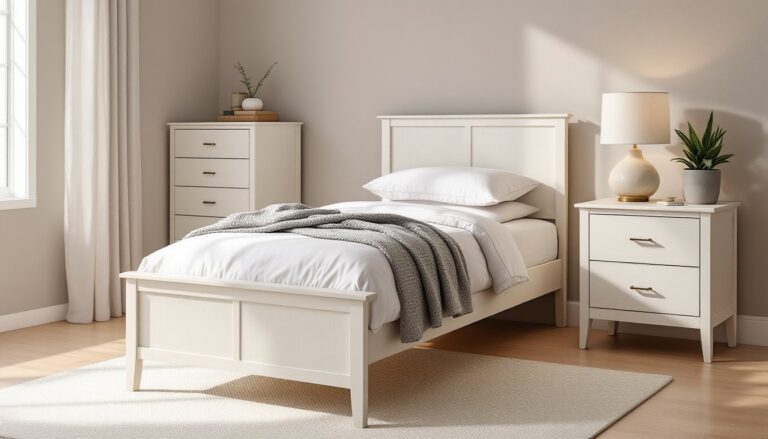
Bed frames (headboard, footboard, rails) often see deep discounts during floor model sales. Unlike mattresses, frames don’t degrade on the showroom floor. A scuff on the footboard or a small ding in the headboard should knock another 10–20% off the clearance tag. For many shoppers exploring major furniture retailers, these floor model deals deliver the best value per dollar.
Nightstands rarely justify full price. Their simple construction, usually a box with a drawer and shelf, means sale prices still offer solid quality. Match the height to the mattress top (within 2–4 inches) for comfortable bedside access.
Mattresses and box springs can be sale-worthy, but tread carefully. Retailers often inflate MSRPs to make discounts look dramatic. Negotiate based on competing models, not the “original” price. Bring measurements for doorways and staircases, a king mattress won’t navigate a 32″ stairwell turn.
Skip armoires and oversized wardrobes unless necessary. These pieces dominate a room and limit future layout flexibility. Built-in closets or modular storage systems often serve better long-term. If an armoire is truly needed, only buy at clearance pricing (50%+ off) because resale value is poor.
Accent pieces (benches, vanities, ottomans) make excellent sale buys if they solve a specific need. A bedroom bench at the foot of the bed provides seating and hidden storage, but only if there’s 24″ of clearance to walk around it.
Smart Shopping Strategies for Bedroom Furniture Sales
Preparation beats impulse every time.
Set a total budget before browsing, then allocate it by priority. If the bed frame is non-negotiable, assign 40% of the budget there and adjust other pieces accordingly. Sales create urgency, but overspending on a nightstand leaves no room for the dresser.
Shop early in the sale for selection, but negotiate late for price. Day one offers full inventory: final weekend brings desperation discounts on leftovers. For big-ticket items, visit early to identify target pieces, then return near closing weekend to negotiate.
Ask about floor models, returns, and “as-is” inventory. Scratches, dents, or missing hardware can drop prices another 20–40%. A gouge in the side panel facing the wall is invisible but still cuts the price. Many stores keep damaged or returned pieces in back, ask specifically.
Bundle for leverage. Buying a complete bedroom set (bed, dresser, two nightstands) gives negotiating power individual pieces don’t. Managers can discount bundles deeper than single items because it clears more floor space.
Understand return policies before buying. “Final sale” or “as-is” tags mean no returns, even if dimensions don’t fit. If the policy allows returns, confirm whether delivery fees are refundable, a $150 delivery charge that’s non-refundable changes the math on a borderline decision.
Finance offers (0% for 12 months, etc.) can work if paid off before interest kicks in, but read terms carefully. Deferred interest means if even $1 remains at month 13, all interest gets applied retroactively. Set up autopay for the exact monthly amount needed to clear the balance.
Many design enthusiasts researching furniture painting techniques find that buying solid wood pieces on sale, then refinishing them, delivers custom looks at budget prices. Unfinished or “natural” finish pieces often cost less than pre-stained options.
Avoiding Common Bedroom Furniture Sale Mistakes
Even experienced shoppers stumble into avoidable errors.
Buying furniture before measuring doorways and stairwells ranks #1. A king headboard won’t fit through a 30″ bedroom door unless it disassembles. Measure door width, stairwell width at the narrowest point, ceiling height on landings, and any 90-degree turns. Delivery crews can’t defy physics.
Ignoring assembly requirements causes headaches. “Ready to assemble” (RTA) furniture at sale prices might save $200 but require three hours, an Allen wrench set, and a high tolerance for frustration. If assembly isn’t a skillset, factor in $75–150 for professional assembly.
Matching finish to existing pieces without samples rarely works. “Cherry” finish varies wildly between manufacturers, bring a drawer pull or wood sample to compare under store lighting. What looks identical online can clash in person.
Buying mismatched sets for marginal savings creates long-term regret. A dresser from one collection and nightstands from another might save $100 today, but the visual disconnect bugs people for years. Either commit to the full set or choose a completely different style.
Overlooking delivery logistics costs time and money. Measure the delivery path from curb to bedroom, if stairs are involved, expect a surcharge ($50–100). White-glove delivery (unpacking, assembly, haul-away) costs more but avoids the DIY headache. Standard delivery often means “curbside” or “threshold”, drivers drop boxes at the door and leave.
Skipping the inspection at delivery is a mistake. Check every piece before signing the delivery receipt. Damage claims after signing face an uphill battle. Look for gouges, finish flaws, missing hardware, and drawer function. Projects chronicled by renovation bloggers at Young House Love often highlight the importance of inspecting furniture immediately upon arrival.
Falling for “free” mattress promotions with bedroom set purchases. The “free” mattress is usually low-quality foam or an entry-level innerspring worth $150 retail. Buying a better mattress separately often makes more sense.
Ignoring local furniture outlets and regional retailers in favor of big-box stores can mean missing better deals. Local stores compete on price and service, often matching or beating chain discounts with better return policies. Many design resources at Homedit showcase how independent retailers sometimes offer unique pieces not found in national chains.