Choosing furniture piece by piece can leave a bedroom looking like a yard sale collection, mismatched nightstands, a dresser that doesn’t quite coordinate, and a bed frame that stands alone in style and finish. A full bedroom furniture set solves that problem by bundling everything into a cohesive look. It’s not just about aesthetics, though. These sets simplify purchasing decisions, often save money compared to buying items individually, and ensure each piece is sized to work together. Whether setting up a guest room, furnishing a rental property, or finally upgrading from college-era furniture, understanding what goes into a full set helps buyers make smart decisions without regret.
Table of Contents
ToggleKey Takeaways
- A full bedroom furniture set typically includes a bed frame, dresser, two nightstands, and optional storage pieces, all designed to match in style, finish, and construction.
- Investing in a full bedroom furniture set saves 15–30% compared to buying individual pieces and eliminates design inconsistencies across different manufacturers.
- Before purchasing, measure your bedroom layout, ensure at least 3 feet of clearance around the full-size bed, and verify that furniture can fit through doorways.
- Solid wood sets ($1,200–$3,000) offer superior durability and refinishing options, while engineered wood sets ($500–$1,500) provide cost savings and modern design flexibility.
- Big-box retailers offer showroom displays and delivery services, online-only brands provide 20–40% discounts, and local furniture stores enable customization and negotiation.
- Plan 2–4 hours for assembly with two people, confirm delivery timelines before purchase (typically 1–2 weeks for in-stock items), and keep instruction manuals for future moves.
What Is Included in a Full Bedroom Furniture Set?
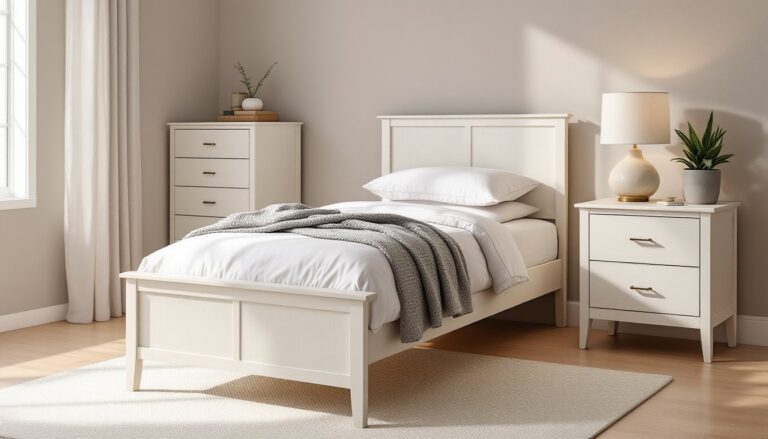
A full bedroom furniture set typically bundles four to six pieces designed to match in style, finish, and construction. The core components almost always include a bed frame (headboard, footboard, and side rails), a dresser with six or more drawers, and two nightstands. Many sets add a chest of drawers (also called a highboy) for additional vertical storage, and some include a mirror designed to mount above the dresser.
The bed frame in these sets is sized for a full-size mattress (also called a double), which measures 54 inches wide by 75 inches long. This distinguishes it from queen or king sets, which accommodate larger mattress dimensions. The nightstands usually measure 20–24 inches wide and stand 24–28 inches tall, sized to align with typical mattress heights of 20–25 inches off the floor.
Some manufacturers bundle additional pieces like upholstered benches, storage ottomans, or coordinating lamps, but these are less common. It’s worth checking whether the set includes the box spring or slats needed to support the mattress, many frames require these separately. Reading the product listing carefully saves surprises at delivery.
Why Invest in a Complete Bedroom Furniture Set?
Buying a matched set offers practical and financial advantages over piecemeal shopping. Cost savings are the most immediate benefit. Retailers bundle sets at a discount compared to purchasing each item individually, typically 15–30% less than buying the same pieces separately. That difference can amount to several hundred dollars on mid-range furniture.
Design cohesion is another major win. Every piece shares the same wood species (or veneer), stain color, hardware style, and construction details. That eliminates the headache of trying to match finishes across different product lines, which is harder than it sounds. Even “espresso” or “walnut” can vary drastically between manufacturers.
Sets also simplify decision fatigue. Instead of comparing dozens of dressers, nightstands, and bed frames across multiple stores, buyers choose one set and move on. For anyone furnishing a rental property, guest bedroom, or teen’s room on a deadline, that efficiency matters.
Finally, matched furniture tends to hold its resale value better. A complete set appeals more to secondhand buyers than orphaned pieces, and it’s easier to list and transport as a bundle. Not everyone keeps furniture forever, and thinking ahead to eventual resale or donation makes sense.
How to Choose the Right Full Bedroom Furniture Set for Your Space
Measuring Your Bedroom
Before falling in love with a set online, pull out a tape measure and record the room’s dimensions. Measure wall-to-wall in both directions, noting the locations of doors, windows, closets, and any built-ins like radiators or floor vents. Don’t forget to measure door widths, furniture has to fit through them.
For a full-size bed frame, allow at least 3 feet of clearance on each side for walking space and making the bed. That means the room should be at least 12 feet wide to comfortably accommodate a full bed centered on a wall. If the room is narrower, consider floating the bed against a wall or opting for a twin or twin XL instead.
Dresser placement often works best on the wall opposite or perpendicular to the bed. Standard dressers are 48–60 inches wide and require an additional 3 feet of clearance in front for drawer access. Measure that space before committing. Nightstands typically fit in the 24–30 inches of wall space flanking the bed, but check that they won’t block outlets or interfere with closet doors.
Sketch a rough floor plan on graph paper or use a free room planner app. It’s easier to spot layout problems on paper than after delivery.
Matching Your Style and Decor
Consider the room’s existing elements, flooring, wall color, trim, and lighting, before choosing a furniture style. Wood tone is the first decision. Lighter finishes like natural oak, white-washed pine, or blonde maple brighten smaller or darker rooms and pair well with cool-toned grays and whites. Darker finishes like espresso, walnut, or cherry add warmth and gravitas but can make small spaces feel cramped unless balanced with lighter walls and textiles.
Hardware style matters more than people think. Brushed nickel or chrome pulls suit modern and transitional interiors, while antique brass or oil-rubbed bronze knobs fit traditional or farmhouse aesthetics. If the set’s hardware doesn’t match existing door knobs or light fixtures, swapping it out is usually straightforward, most dressers use standard 3-inch or 5-inch center-to-center pulls.
Style also dictates construction details. Mission or Craftsman sets feature clean lines, visible joinery, and minimal ornamentation. Traditional or French country sets include carved details, curved legs, and decorative molding. Mid-century modern sets emphasize tapered legs, low profiles, and minimalist hardware. Mixing styles within the same room rarely works unless there’s a deliberate eclectic strategy.
Popular Styles and Materials for Full Bedroom Furniture Sets
Solid wood remains the gold standard for durability and longevity. Oak, maple, and cherry are common hardwoods used in quality sets. They resist dents and scratches better than softer woods and can be refinished if needed. Expect to pay $1,200–$3,000 for a solid hardwood set, depending on species, finish complexity, and joinery quality. Dovetail drawer construction and mortise-and-tenon joints are signs of well-built solid wood furniture.
Engineered wood (also called composite or manufactured wood) includes MDF, particleboard, and plywood covered with wood veneer or laminate. These materials cost less, $500–$1,500 for most sets, and allow manufacturers to achieve consistent finishes and modern shapes. Quality varies widely, though. Look for furniture with a sturdy plywood core and real wood veneer rather than printed laminate, which can peel or chip.
Many contemporary design-focused bedroom systems combine materials strategically, solid wood frames with veneer panels, for example, to balance cost and durability. That’s a smart compromise if the set uses real wood where it matters (drawer boxes, legs, structural frames) and veneer on non-stress surfaces like drawer fronts and side panels.
Metal bed frames paired with wood case goods create an industrial or transitional look. Powder-coated steel or wrought iron holds up well and requires no refinishing, though it’s less forgiving if bumped. These sets often run $800–$2,000, depending on the metal finish and wood quality.
Upholstered bed frames add softness and luxury. They’re typically paired with wood dressers and nightstands in coordinating finishes. The upholstery, linen, velvet, or faux leather, requires occasional vacuuming or spot cleaning, and it’s worth checking whether the fabric is stain-resistant if kids or pets will be around.
Where to Buy Full Bedroom Furniture Sets and What to Expect
Big-box furniture retailers like Ashley Furniture offer extensive selections of full bedroom sets across all price points and styles. These stores provide showroom displays where buyers can see finishes and test drawer glides in person, which is invaluable for assessing build quality. Delivery and assembly services are usually available for an additional fee, expect $100–$300 depending on the region and number of pieces.
Online-only retailers and direct-to-consumer brands often undercut traditional stores by 20–40% thanks to lower overhead. The trade-off is that buyers can’t inspect furniture before purchase, and assembly is almost always DIY. Read return policies carefully, restocking fees and return shipping costs can eat into savings if the set doesn’t work out. Platforms like Houzz aggregate products from multiple retailers and offer user reviews, which helps narrow down options.
Local furniture stores and regional chains sometimes offer better customization, swapping hardware, choosing alternate finishes, or mixing pieces from different sets. They may also stock higher-end brands not available at national chains. Prices tend to run higher, but the trade-off is personalized service and the ability to negotiate, especially during holiday sales.
Used and consignment shops can yield solid wood sets at steep discounts, though availability is hit-or-miss. Inspect for structural integrity, wobbly legs, cracked panels, and loose joints are red flags. Surface scratches and outdated finishes can be fixed with sanding and refinishing, but that’s a separate project requiring sandpaper, stain, polyurethane, and patience. Budget 8–12 hours for a basic refinishing job on a five-piece set.
Delivery timelines vary widely. In-stock items from big-box stores might arrive within 1–2 weeks, while custom or made-to-order sets can take 8–12 weeks. Confirm lead times before committing, especially if furnishing a space with a deadline. Some retailers offer white-glove delivery, where movers unpack, assemble, and haul away packaging, worth the extra cost for anyone without a truck, tools, or a helper.
Assembly is straightforward for most sets but time-consuming. Plan on 2–4 hours for a complete set, and have a power drill with Phillips bits, Allen wrenches (usually included), and a rubber mallet on hand. Two people make the job easier, especially when attaching headboards or moving heavy dressers. Keep instruction manuals, they’re essential if furniture needs to be disassembled for a move.
Inspiration for integrating bedroom furniture into broader home design projects can be found on sites like Design Milk, which showcases modern interiors and product reviews. Seeing how designers style complete rooms helps buyers visualize how individual furniture choices contribute to overall aesthetics.