Picking a dining room set isn’t like grabbing a can of paint, you’re committing to the piece of furniture where family dinners, assignments sessions, and holiday gatherings will happen for the next decade. Ashley Furniture has become the go-to source for homeowners looking to balance style, durability, and cost. With hundreds of collections spanning farmhouse charm to sleek modern lines, Ashley offers dining sets that fit nearly every space and budget. But walking into a showroom, or scrolling through pages online, can feel overwhelming. This guide cuts through the noise, offering practical advice on styles, sizing, materials, and money-saving strategies so readers can make a confident choice.
Table of Contents
ToggleKey Takeaways
- Ashley Furniture dining room sets offer a wide range of styles from farmhouse to modern, with pricing from $400 to $2,500+, making them accessible for nearly every budget and design preference.
- Proper sizing is critical—leave at least 36 inches of clearance on all sides of your table, and use the 24-inch-per-person rule to determine seating capacity without overcrowding your dining space.
- Material choice impacts durability and maintenance: solid wood lasts longest but costs more, engineered wood with veneer offers affordability and stability, and glass or metal pieces work best for modern aesthetics but require regular cleaning.
- Smart shoppers can save 20–30% by shopping holiday sales, negotiating floor models or open-box returns, and skipping add-on services like in-store fabric protection and white-glove assembly.
- For households with children or pets, prioritize durable materials and finishes over pure aesthetics—distressed farmhouse tables hide dings better than glossy modern surfaces, and performance fabrics resist stains.
- Avoid common financing traps by setting up autopay to ensure full payment before promotional periods end, as deferred interest can retroactively apply 25–30% APR if balances aren’t paid off in time.
Why Ashley Furniture Dominates the Dining Room Market
Ashley Furniture holds the largest furniture retailer title in North America for good reason. The company manufactures most of its own products, which allows tighter quality control and lower prices compared to brands that outsource everything. That vertical integration means fewer markups between factory and showroom floor.
Their dining room collections span every price tier. Entry-level sets start around $400 for a small table and four chairs, while premium solid wood collections with upholstered seating can hit $2,500 or more. This range makes Ashley accessible whether someone’s furnishing a first apartment or upgrading a forever home.
Another advantage: availability. Ashley operates over 1,000 locations across the U.S., plus a robust online platform with white-glove delivery options. Stock is generally consistent, so if a homeowner falls in love with a particular set, it’s likely available for delivery within weeks, not months. Contrast that with boutique furniture makers where lead times can stretch six months.
Ashley also offers financing plans with promotional periods, which can ease the upfront cost burden. Just read the fine print, deferred interest can bite if the balance isn’t paid off in time. For DIYers who prefer to haul and assemble themselves, many stores offer discounted floor models or scratch-and-dent inventory. A minor cosmetic flaw on a table leg is easy to hide with strategic placement or a quick touch-up with wood filler and stain.
Popular Ashley Dining Room Set Styles and Collections
Ashley’s catalog mirrors current interior design trends while keeping timeless styles in rotation. Two categories dominate sales: farmhouse/rustic and modern/contemporary. Here’s what sets them apart and which might suit a given space.
Farmhouse and Rustic Dining Sets
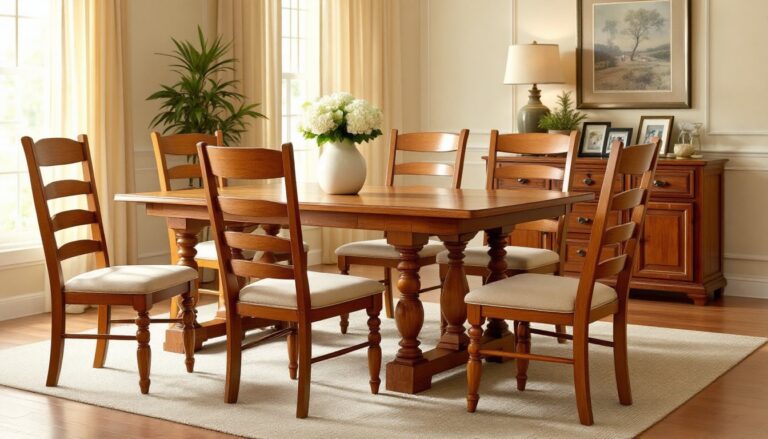
Farmhouse sets lean heavily on reclaimed wood aesthetics, distressed finishes, and chunky legs. Think Joanna Gaines but without the $10,000 custom build price tag. Ashley’s Valebeck and Grindleburg collections are perennial favorites here. These sets typically feature planked tabletops with visible wood grain, cross-buck or turned legs, and bench seating options.
Material notes: Most farmhouse-style Ashley tables use engineered wood cores with wood veneer or acacia solid wood tops. Veneers get a bad rap, but modern veneers are durable and resist warping better than solid wood in fluctuating humidity. Just avoid placing hot pans directly on the surface, use trivets.
These sets pair well with neutral walls, open shelving, and vintage accents. They work in both formal dining rooms and eat-in kitchens. Bench seating is practical for families with young kids: it’s easier to clean than upholstered chairs and fits more bodies in a pinch. But, benches lack back support, so elderly guests might prefer traditional chairs.
Designers at Homedit frequently highlight farmhouse dining as a trend that bridges rustic warmth with modern simplicity, making it a safe long-term investment.
Modern and Contemporary Options
Modern Ashley collections, like the Kavara counter-height set or the Centiar collection, favor clean lines, metal bases, and glass or faux marble tops. These sets often incorporate mixed materials: a wood top with black metal legs, or a white faux marble surface on a geometric base.
Durability concerns: Glass tops show every fingerprint and water ring. If the household includes kids under ten, tempered glass is a must, but even then, expect daily wipe-downs. Faux marble (high-pressure laminate over particleboard) looks sharp and resists stains better than real marble, but it can chip at the edges if chairs bang into it repeatedly.
Counter-height tables (36 inches tall versus the standard 30 inches) create a casual, bar-like vibe and work well in open-concept spaces where the dining area flows into the kitchen. They pair with stools instead of chairs, which some people find less comfortable for long meals. Measure your existing barstools before committing: standard counter stools are 24–26 inches tall.
Modern sets shine in smaller spaces because lighter materials and open bases create visual breathing room. A glass-top table doesn’t dominate a room the way a chunky farmhouse piece does.
How to Choose the Right Size Dining Set for Your Space
This is where most buyers screw up. A gorgeous table crammed into an undersized room turns every dinner into a game of musical chairs. Here’s the math.
Clearance rule: Leave at least 36 inches of clearance on all sides of the table. That’s the minimum space for someone to pull out a chair and sit down without hitting a wall or sideboard. If the dining room also serves as a traffic path to another room, bump that to 48 inches on the pass-through side.
Table size by room dimensions:
- 10×12-foot room: A 36×60-inch rectangular table or a 42-inch round fits comfortably with four chairs.
- 12×14-foot room: A 42×72-inch table seats six without crowding.
- 14×16-foot room or larger: Go for 42×84 inches or add a table with a removable leaf for holiday expansions.
Ashley sells many sets with butterfly leaf extensions stored under the tabletop. These are lifesavers for hosting but add weight and complexity to the mechanism. Open and close the leaf in the store before buying, cheap hardware binds or wobbles.
Seating capacity: Allow 24 inches of table width per person. A 60-inch table seats six people comfortably (three per long side). Don’t forget to account for table legs and aprons, which can limit knee room. Pedestal bases (single center support) offer more legroom than four-corner legs.
Before shopping, tape out the table footprint on the floor using painter’s tape. Live with it for a day. Walk around it. Pull mock chairs in and out. If it feels tight, go down a size. Many furniture stores encourage customers to do this exercise before finalizing a purchase.
Material and Durability Considerations
Ashley offers dining sets in a range of materials, each with trade-offs in durability, maintenance, and cost. Here’s what to know before signing the receipt.
Solid wood: Oak, acacia, and pine are common. Solid wood dents and scratches but can be sanded and refinished. It’s the longest-lasting option if cared for properly. Acacia resists moisture better than pine, making it suitable for homes in humid climates. Expect to pay $1,000+ for a solid wood set.
Engineered wood with veneer: This is the majority of Ashley’s mid-tier collections. A core of MDF or particleboard is topped with a thin layer of real wood veneer. It’s stable, affordable ($500–$1,200), and won’t warp like solid wood might. The downside: once the veneer chips or scratches through to the core, repair is tough. Avoid dragging place settings or centerpieces across the surface.
Metal and glass: Metal bases (usually powder-coated steel) are nearly indestructible. Glass tops, as noted earlier, need constant cleaning but won’t stain. Tempered glass is four times stronger than standard glass and shatters into small, less dangerous pieces if it breaks. Always verify tempered construction, it’s usually etched in a corner.
Upholstery on chairs: Fabric seats look cozy but stain easily. Microfiber or performance fabrics (like those treated with stain repellents) are smart for families. Faux leather (polyurethane) wipes clean but can crack and peel after a few years, especially in dry climates. Genuine leather lasts longer but costs more and still requires conditioning.
Finish quality: Check tabletop finishes in person if possible. A good catalyzed lacquer or polyurethane topcoat resists water rings and light scratches. Cheaper finishes feel thin and show wear within months. Run a fingernail lightly across a hidden spot (underside of the table), if it dents easily, the finish is weak.
For homes with active kids or pets, prioritize materials over aesthetics. A distressed farmhouse table hides dings better than a glossy modern one. And a pedestal base means fewer table legs to trip over during a Saturday morning cereal spill cleanup.
Budget-Friendly Tips for Buying Ashley Dining Furniture
Ashley’s pricing is competitive, but smart shoppers can shave hundreds off without sacrificing quality.
Holiday sales: Memorial Day, Fourth of July, Labor Day, and Black Friday typically bring 20–30% discounts on dining sets. Presidents’ Day and end-of-year clearance (late December through January) are also solid. Sign up for the email list, Ashley sends early-access codes to subscribers.
Floor models and open-box: Floor models have been sat on, touched, and possibly dinged. Ask the sales associate to inspect it with you and document any damage. Negotiate an additional 10–20% off the marked clearance price if there are noticeable flaws. Open-box returns (customer changed their mind) are often discounted 15–25% and may have never been assembled.
Buy the table separately: Ashley sells many tables and chairs as sets, but you’re not locked in. Mixing a higher-quality table with budget chairs, or vice versa, can save money. Chairs take more abuse than tables, so investing in solid wood or metal chairs and pairing them with a veneer table can be a smart play. Cross-brand mixing works too: American Furniture Warehouse and other regional retailers often carry complementary styles at different price points.
Skip unnecessary add-ons: Sales staff will pitch protection plans, fabric treatments, and white-glove assembly. Fabric protection sprays (like Scotchgard) can be bought at any hardware store for $10 versus $150 in-store. White-glove delivery is convenient but adds $100–$300: if you have a truck and a friend, standard delivery to the curb is often free or low-cost. Just be ready to haul and assemble. Most Ashley sets use cam-lock fasteners and dowels, basic tools (Allen wrench, screwdriver) are all you need.
Financing fine print: Ashley’s “12 months no interest” deals are great if paid off in full before the promo ends. Miss that deadline by a day, and accrued interest (often 25–30% APR) gets tacked onto the balance retroactively. Set up autopay for slightly more than the minimum to avoid that trap.
Used and secondary markets: Check Facebook Marketplace, Craigslist, or estate sales. Ashley sets pop up frequently because they’re so common. A gently used set might run 50–70% below retail. Inspect joints, leg stability, and finish condition before buying. Wobbly legs usually mean loose fasteners (easy fix) or cracked joints (not worth it). Bring a level and a tape measure.
Readers exploring broader options for quality furniture might consider regional giants like Nebraska Furniture Mart, which stocks Ashley alongside other brands and often price-matches. Meanwhile, design-forward shoppers looking for style inspiration can browse Elle Decor for high-end looks, then hunt for Ashley dupes that capture the vibe without the designer markup.
Final cost check: A typical Ashley dining set (table plus four chairs) in the mid-tier range runs $700–$1,400 before tax and delivery. Add $100–$200 for delivery unless buying during a free-shipping promo. If buying chairs separately or adding a bench, budget an extra $150–$400 depending on material and style.
Dining room furniture is one of the few pieces in a home that genuinely gets used daily. Skimping to save $200 might mean replacing the set in three years instead of ten. But overspending on features that don’t fit the household’s lifestyle, like white upholstered chairs in a house with toddlers, wastes money too. Balance durability, aesthetics, and realistic use.